
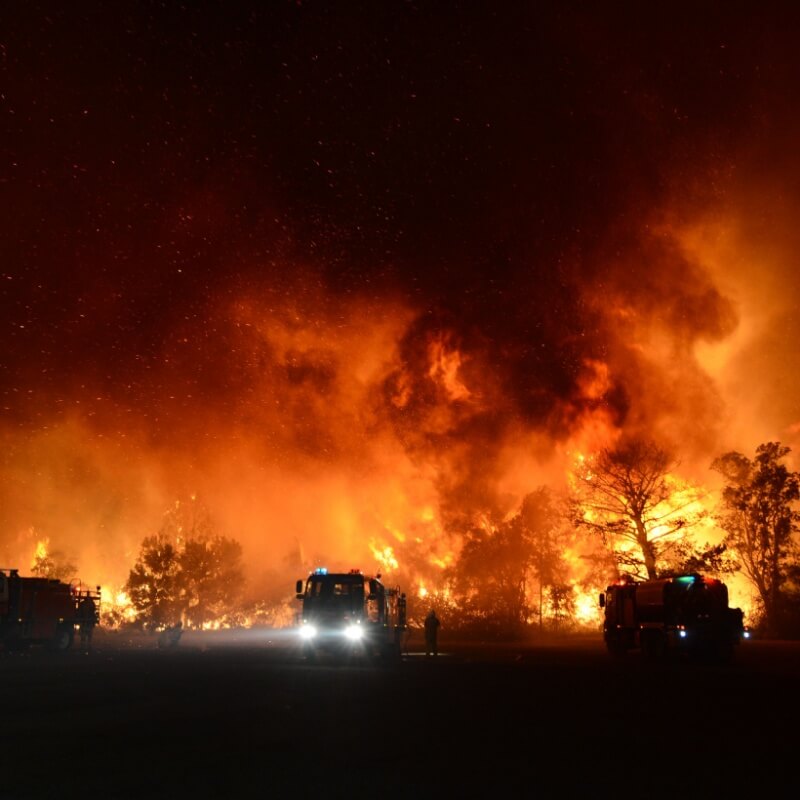
The raw emotion of this survivor hits hard – you can’t even imagine the experience. Like most Aussies, I’ve been keeping a firm eye on what’s going on in Australia, especially my home state of Victoria. I’ve really appreciated friends and family reaching out to tell me they were OK. I know many have lost everything and this isn’t over.
One of my biggest concerns is El Nino is on the way and it’s expected to hit mid-2026. For Australia, this is when fire seasons really take off, it’s also when temperatures get even hotter, and yet I’m looking at the infrastructure set up for this current catastrophe and it’s not enough.
First, the response of the fire professionals and volunteers is astounding, as is the setup of evacuation centres, as well as the fact most seem to be taking evacuation seriously. That’s a relief.
But with temperatures in the mid to high 40s, the evacuation tents set up on fields are not suitable for this sort of heat. People need aircon, so setting up rescue centres in shopping centres or schools (not in the path of the fire) is a possible path forward. However, make sure any facilities run on renewable energy, because the electrical grid is also at risk in extreme heat.
From what I’ve heard, the electrical grid in Australia has held up so far in this heat (not including the places devastated by fire), but based on past heat extremes around the world, from about 48C grids start falling over.
This risk is more challenging for countries with grids above ground, and Australia is a country with a lot of electricity infrastructure above ground – mainly due to the sheer scale of the country, which makes it necessary. It would need a lot of copper and money to put it underground, but that day will come.
As individuals, a priority for everyone is to be grid independent, and in Australia, that is moving forward fast – which is great. But make sure the wiring isn’t black and be conscious of where you store your battery, as it could explode during heat extremes. This doesn’t get discussed enough.
If you can’t be independent, have a place to go if the grid falls over. We all need to understand the electricity infrastructure where we live and know the risks if it goes down. In much of the developing world, where electricity infrastructure is above ground and sub-standard in any extreme weather event – not just heat – the grid is a real risk to life.
Being prepared is important, so, before the next extreme heat event hits, ask the question – where can you go if the grid falls over? Perhaps a neighbour who is set up independently (and sensibly) is the best option, because it’s close and close matters in extreme heat events.
But if that’s not an option, what else can you do? Remember, based on where you are, if it gets too hot movement gets harder, because roads melt, tires melt, engines don’t start, etc… Close is good.
Educate yourself on heat stroke and the symptoms to look out for, and remember, surviving heat stroke can set you up for organ damage for life – examples include kidney failure. I know this ain’t pretty, but we need to know this stuff.
Check on your neighbours too, especially the elderly, and remember, kids are more susceptible to heat stroke, because their bodies don’t sweat yet.
I’ve been talking about this for a long time; I even did a guide a few years ago after going through two extreme heat seasons in Thailand. It scared the life out of me and so I wanted to know what I should do, as well as help others too.
What I know from this research and more since then, is if temperatures start pushing into the 50C range, our risk increases, but that doesn’t even take into account the other critical parts of the story that aren’t so immediate – like our ability to grow food (including livestock being able to survive), ecosystems destroyed by heat which won’t be able to come back (the coral reefs have already hit their tipping point), etc, etc, etc….
Here’s one story happening in Australia with this event: Flying foxes die in their thousands in worst mass-mortality event since Australia’s black summer | Wildlife | The Guardian.
And another story in the Global South: Climate Change Driving Mass Bird Deaths in the Amazon – The Good Men Project.
I know it’s not good news, but this is where we are. Educating ourselves, preparing in advance, doing everything we can to know what we need to do now is what matters. We can deny it all we like, but this is what’s happening and an El Nino year is on the way. That means it’s going to get hotter, especially for all of us in the global south.
Get prepared. Bring your community together and act.
Cheers
Andrea
#ExtremeHeat #Adaptation #Scale #UncommonCourage